

Professional Certification Training
The Both-Sides Methodology:
Why Working With Parents AND Children Changes Everything
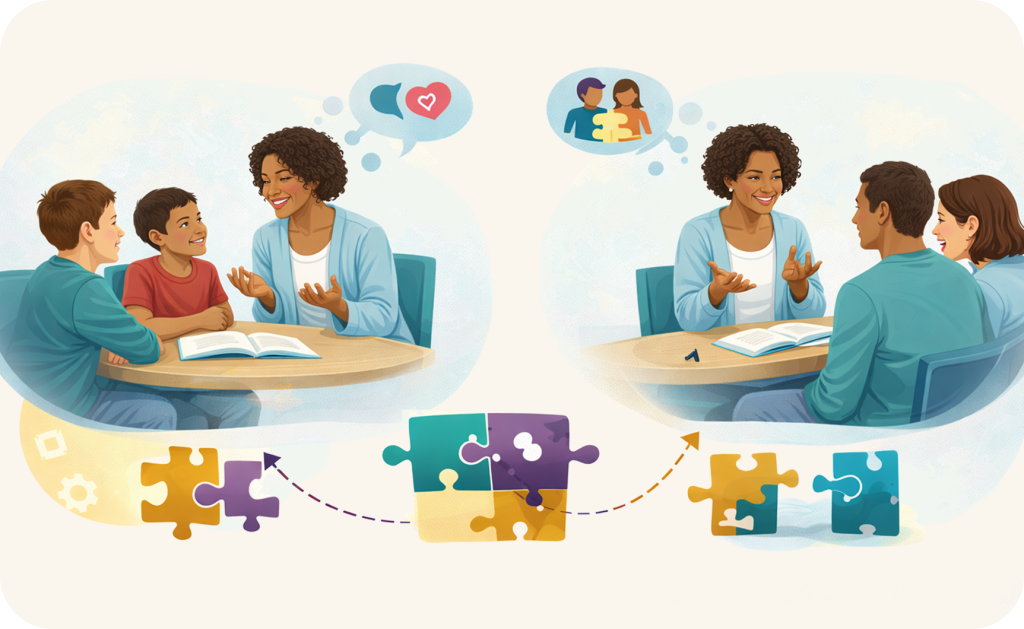
What Is the Both-Sides Methodology?
The Both-Sides Methodology is not simply a technique for gathering information from both parent and child. It is a system-level recalibration of the relational ecosystem within a family.
Most family coaching focuses exclusively on the parent – offering strategies, reframes, and behavioral tools. But the parent is only one part of a dynamic system. When you work with the parent alone, you’re attempting to shift a system from the outside.
The Both-Sides Methodology places you inside the system. You observe the emotional environment in real time. You witness how regulation (or dysregulation) moves between parent and child. You see where leadership has collapsed into control, where connection has been replaced by correction, and where behavioral data is being misread as defiance.
This is not information gathering. This is environmental recalibration.
Small, selective cohorts (typically capped at 10 participants)
Why Parent-Only Coaching Leaves the System Intact
When you coach the parent alone, you rely on their reporting. You hear their interpretation of what’s
happening. You offer strategies based on what they describe.
But you cannot see:
- How the parent’s nervous system state triggers the child’s response
- Whether the parent’s leadership style invites cooperation or resistance
- How the child interprets the parent’s attempts at connection
- What the child’s behavior is actually communicating
Parent-only coaching assumes the parent can implement strategies in a vacuum. But families are not vacuums. They are relational feedback loops.
A parent can learn a new approach in session and return home to a child who has learned to expect control, inconsistency, or conditional connection. The system resists the change because the system itself has not shifted.
The Both-Sides Methodology disrupts this pattern by working with the system, not around it.
Small, selective cohorts (typically capped at 10 participants)
How the Both-Sides Methodology Functions - The 5 Core Pillars of the Parent-Child Whisperer® Methodology
The Both-Sides Methodology operates through the five core pillars of the Parent Child Whisperer® framework. It is not a standalone tactic – it is the application of the full system in real time.
View Behavior as Data, Not Defiance
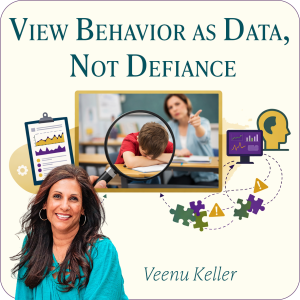
When you work with both parent and child, you observe behavior as it unfolds. You see what the child’s resistance is actually communicating. You watch how the parent interprets that behavior – and whether they respond to the data or react to the perceived defiance.
This allows you to recalibrate the parent’s lens in the moment. Instead of explaining why behavior is data, you show them. The child becomes the teacher. The parent’s nervous system begins to shift from threat response to curiosity.
Regulate Before You Educate

In a both-sides session, you witness the parent’s regulation state and the child’s regulation state simultaneously. You see the nervous system contagion between them.
When the parent escalates, you observe how the child mirrors that dysregulation. When the parent attempts correction before connection, you see the child shut down or resist. You can intervene in real time – modeling co-regulation, redirecting the parent’s approach, and helping the child return to a regulated state before any teaching occurs. This is not theoretical. It is live environmental recalibration.
Connection Before Correction
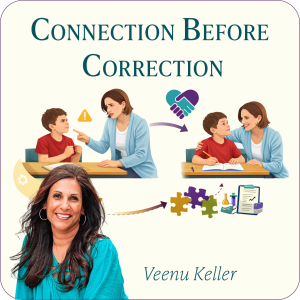
Parent-only coaching teaches the principle of connection before correction. But the parent must then attempt to apply it at home, often in a relational environment where trust has already eroded.
In a both-sides session, you facilitate connection in real time. You guide the parent to pause correction and prioritize relational safety. You help the child experience what it feels like when a parent leads with curiosity instead of control. The system begins to rewire itself during the session, not after it.
Boundaries Without Punishment

When you work with the parent alone, you teach them how to set boundaries. When you work with both sides, you help the parent practice boundaries in real time while the child is present.
The child learns that boundaries are not punishment. The parent learns that boundaries can coexist with connection. You observe whether the parent’s delivery invites cooperation or triggers defensiveness. You adjust in the moment.
This accelerates clarity. The parent doesn’t go home and experiment. They leave the session having already practiced the shift.
Leadership Over Control
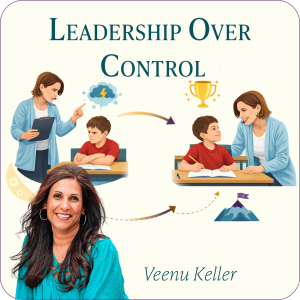
Control-based parenting creates resistance. Leadership-based parenting invites cooperation.
In a both-sides session, you witness whether the parent is leading or controlling. You see how the child responds to each approach. You guide the parent to shift from demands to explanations, from consequences to collaboration, from power struggles to shared problem-solving.
The child experiences what it feels like to be led, not controlled. The parent experiences what it feels like to guide without force. The relational dynamic begins to transform – not because you explained it, but because they lived it in session.
What Both-Sides Methodology Reveals
Working with both parent and child allows you to observe what parent-only coaching cannot
access:
- Emotional regulation patterns: Who dysregulates first? How does dysregulation move through the system?
- Leadership dynamics: Is the parent leading, controlling, or avoiding leadership altogether?
- Relational feedback loops: How does the parent’s behavior shape the child’s behavior – and vice versa?
- Misattributions: What the parent perceives as defiance may be fear, confusion, or unmet need.
- System resistance: Where the family structure itself is preventing change.
These observations allow you to design interventions that address the system, not just the
symptoms.
Why Both-Sides Work Accelerates Transformation
When you coach the parent alone, they must:
- Understand the concept in session
- Remember the approach at home
- Apply it in a high-stress moment
- Navigate the child’s resistance without support
- Return to you weeks later to report what happened
When you work with both sides, the transformation occurs inside the session. The parent practices the new approach with coaching support. The child experiences the shift in real time. The system recalibrates as you guide it.
This does not guarantee speed. But it creates greater precision in intervention and more
sustainable outcomes over time.
Who Benefits Most From the Both-Sides Methodology
The Both-Sides Methodology is particularly effective for families where:
- Parent-only coaching has stalled: The parent understands the concepts but cannot implement them consistently.
- The child’s behavior is misunderstood: The parent perceives defiance where there is fear, confusion, or unmet need.
- The relational environment has become adversarial: Trust has eroded, power struggles dominate, and connection feels impossible.
- Generational patterns are repeating: The parent is unconsciously replicating control-based dynamics from their own childhood.
- The parent’s nervous system dysregulation is driving the child’s behavior: The parent’s stress, reactivity, or hypervigilance is shaping the child’s responses.
This is not about fixing the child. It is about recalibrating the system so the child no longer needs the behavior.
How to Position Both-Sides Methodology to Families
When introducing this approach to families, avoid framing it as:
- “We need to include your child so I can see what’s really happening”
- “I need both perspectives to get the full picture”
- “Your child needs to hear this directly from a coach”
Instead, position it as:
- “We’re going to work on shifting the emotional environment in your family. That happens most
effectively when I can guide the system in real time.” - “This isn’t about interviewing your child. It’s about recalibrating how leadership, regulation, and connection function in your home—and that requires observing the relational dynamics directly.”
- “You’ve been working hard to implement these strategies. Now we’re going to bring your child in so you can practice the shifts with live coaching support.”
The parent is still your primary client. The work is still about their leadership. But the methodology requires access to the relational ecosystem, not just one person’s perspective.
What Makes Parent Child Whisperer® Different
Many coaching programs teach family dynamics. Some teach behavior-based approaches. A few even teach both-sides techniques.
But the Parent Child Whisperer® Certification integrates the Both-Sides Methodology into a
complete system-level framework. You don’t just learn to work with parent and child. You learn:
- How to assess whether a family is ready for both-sides work
- How to apply the 5 Pillars in real-time sessions
- How to observe and interrupt nervous system contagion
- How to shift a parent from control to leadership while the child is present
- How to maintain coaching scope while addressing complex relational dynamics
This is not a collection of techniques. It is a proprietary methodology designed to transform family systems at the relational, regulatory, and behavioral levels.
Conclusion
The Both-Sides Methodology is not about gathering more information. It is about recalibrating the relational ecosystem so that sustainable change becomes possible.
When you work with both parent and child, you move from theory to transformation. You observe the system in real time. You guide it toward regulation, connection, and leadership. You help families shift from control-based dynamics to collaboration.
This is the core of the Parent Child Whisperer® approach – and it is what makes this certification distinct from every other family coaching program available.
Common Misconceptions About Both-Sides Work
"Isn't this just family therapy?"
No. Family therapy addresses relational dysfunction, emotional wounds, and pathology. The Both-Sides Methodology is a coaching model focused on leadership development, regulation, and behavioral systems. You are not treating a disorder. You are recalibrating a relational environment.
"Don't you need clinical training to work with children?"
Not if you are coaching, not treating. The Both-Sides Methodology does not diagnose, treat, or address mental health conditions. It teaches parents how to lead, regulate, and interpret
behavior – and it involves the child in that process. If clinical issues are present, you refer. If the family is struggling with behavior, leadership, or
connection – you coach.
"What if the child doesn't want to participate?"
Resistance is data. If the child refuses to engage, that tells you something about the relational environment. You work with the parent to understand what that resistance means. You adjust the approach. You build safety first.
Not every family is ready for both-sides work. Part of your role is assessing readiness and adapting the methodology to meet the family where they are.
What's the difference between certification and license?
A: You receive both upon completion:
Certification = Professional credential proving you completed training and demonstrated competency in the Parent Child Whisperer® methodology.
License = Legal permission to use the Parent Child Whisperer® registered service mark (®) in your business name, marketing, and service descriptions.
Most programs only give you certification. PCW gives you both – so you can leverage the brand, not just the skills.
Do you provide marketing support or help me get clients?
A: Yes – but not done-for-you client generation.
What we provide:
- Marketing templates (website copy, social posts, email scripts)
- Positioning strategy (how to talk about PCW with prospects)
- Referral network (overflow clients from Veenu’s inquiries)
- Business coaching on monthly calls (pricing, packages, enrollment)
What we don’t do:
- Run ads for you
- Build your website
- Guarantee a certain number of clients
You’re building a professional practice—we give you the tools and methodology, but you drive your business growth.
What if I don't feel confident after 8 weeks?
A: You have 12 months of ongoing support.
After Week 8, you get:
- Monthly group coaching calls with Veenu (12 months)
- Private practitioner community for case consultation
- Continued access to all recordings and materials
Most practitioners feel competent (not confident) after Week 8. Confidence builds through practice. By months 3-6, you’ll feel like an expert.
Are payment plans available?
The payment platform allows different payment options. These depend on your ability to get financing from the payment gateways. See the application page for more details